
Thursday 5 February 2026 11:02
Carnevale Romano: The Story of Rome’s Carnival
What are the origins of Carnival? Discover the old celebrations of the Carnevale Romano, and how to celebrate Carnival 2026 in Rome.
The post
Carnevale Romano: The Story of Rome’s Carnival
appeared first on Romeing
.read the news on Romeing
Carnival is celebrated all around the world, but like “all roads,” it likely has roots in Rome. Now a Roman Catholic celebration, Carnival takes place in the days before Lent, the 40-day period in which Catholics abstain from a chosen vice (the word Carnevale comes from carnovale, which means “removal of meat”). However, Carnival probably started as the pagan Saturnalia festival of ancient Rome.
Saturnalia suspended work and business, temporarily “freed” slaves, and eased moral restrictions. Saturn was the Roman god of agriculture, and the festivities honoring him involved decorative masks, rituals and drunken parties.
The festival was adopted in the age of Catholicism with a few adaptations. As early as 1143 AD, the Pope held ceremonies in today’s
Testaccio
neighborhood of Rome. This included jousting, duels, and hunting. However, it wasn’t until Pope Paul II came to power and relocated his residence to Piazza Venezia that Carnevale truly took off. The Carnival festivities moved there with him, making Via Lata (now Via del Corso
) a natural setting for the most anticipated events of the Carnival: the Inaugural Parade and the Race of the Barbary Horses.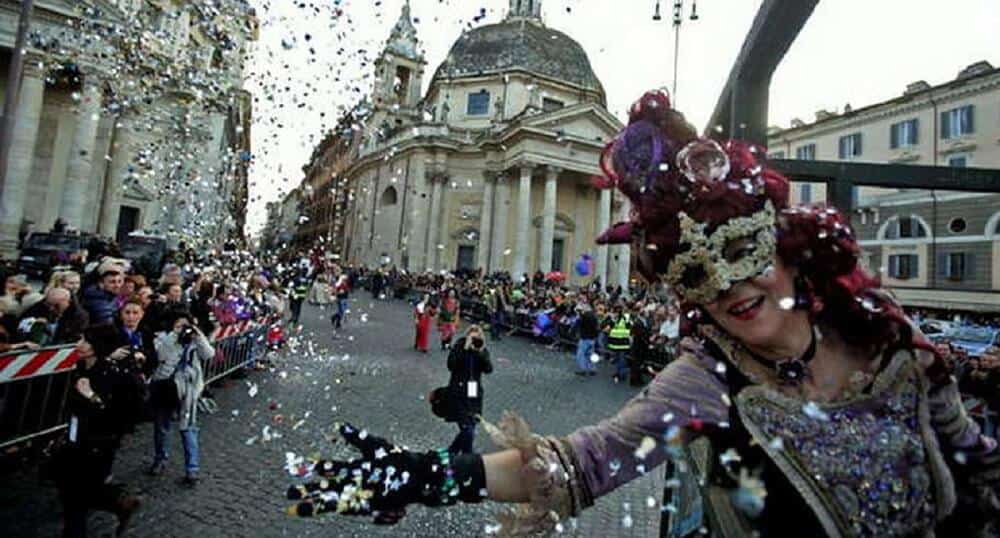
Via del Corso was the central racetrack of Carnival. The races started in Piazza del Popolo and stretched down Via del Corso, ending at Piazza Venezia. There were races for children, elderly people, donkeys and buffaloes. One pope, Alexander VI Borgia, even introduced a race of prostitutes in 1501. Of all the competitions, the Barbary horses created the most chaos. La Corsa dei Berberi, “The race of the Berbers,” focused on a specific breed, known as the Berber horse, or Barb horse, which was bred prolifically in ancient Rome for its strength, stamina and speed. Those qualities made the animals the ideal chariot horses for competitors in Circus Maximus. Their reputation carried on into the Roman Catholic Carnival.
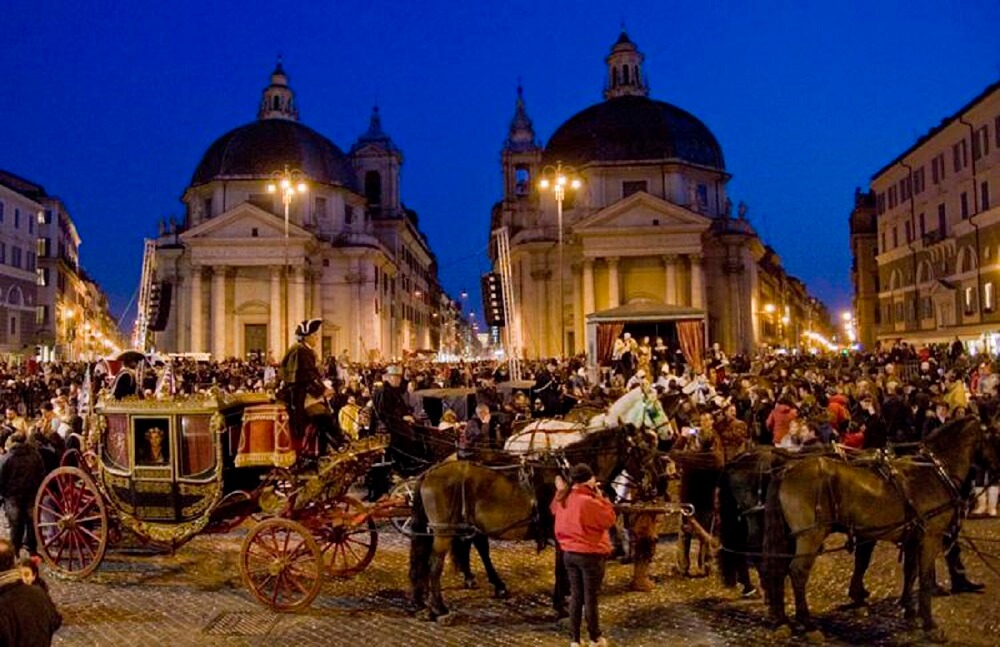
Noble families contributed male Berber horses to participate in the race and braided colorful ribbons into their manes. Spectators gathered at Piazza del Popolo to watch the preparation of the horses and make wagers. Uninhibited by riders, the horses galloped about a mile, finishing in Piazza Venezia, where the owners of the winning horse were presented with a decorative saddle.
The equine race was abolished in 1874 by King Vittorio Emanuele II after a lethal accident, and since then, Rome’s Carnival festivities have gone mostly dormant. The spirit of the carnival, however, has survived through special celebrations such as those organised by cultural associations like “Il Carnevale Romano Storico”. This association operates in the fields of cultural promotion and strives to preserve the tradition of the Roman Carnival.
The last celebration of Carnival organised by “Il Carnevale Romano Storico” was held before the pandemic, but the celebrations organized in the past have included theater performances, historical re-enactments, the famous equestrian parade, fireworks, street art performances, concerts, and masquerade balls.
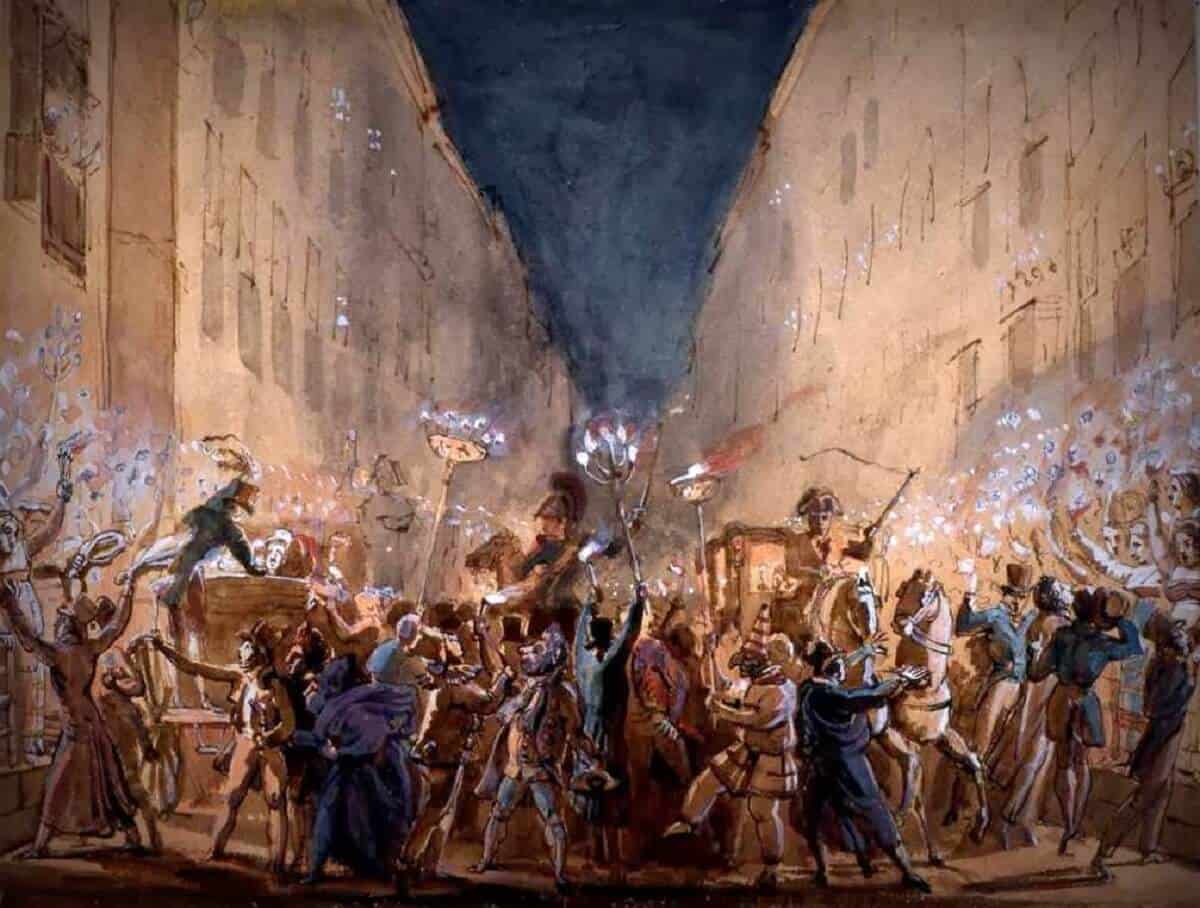
Jean Louis Baptiste Thomas, La festa dei Moccoletti, 1817
The modern carnival has even included the famous Candles Feast or “Festa dei moccoletti”, a group game which used to conclude the Roman Catholic Carnival. The feast took place at sunset on the evening of Mardì Gras. Participants wore decorative masks and carried a lit candle or a lantern, trying to maintain their flame while simultaneously attempting to extinguish other participant’s lanterns. If your flame went out, you were forced to take off your mask.
Some Carnival celebrations have revived in the rest of Italy too. Since its reinstatement in 1979, Venice’s Carnival has brought revellers to canals for parades in which colorful floats dance on water and acrobats twirl and balance on tightropes. Decorative masks and costumes shroud the city in mystery. The regions of Piedmont and Sicily are also known for their celebrations, which include similar events involving shiny masks, and elaborate costumes.
Best Cities In Italy For Carnival
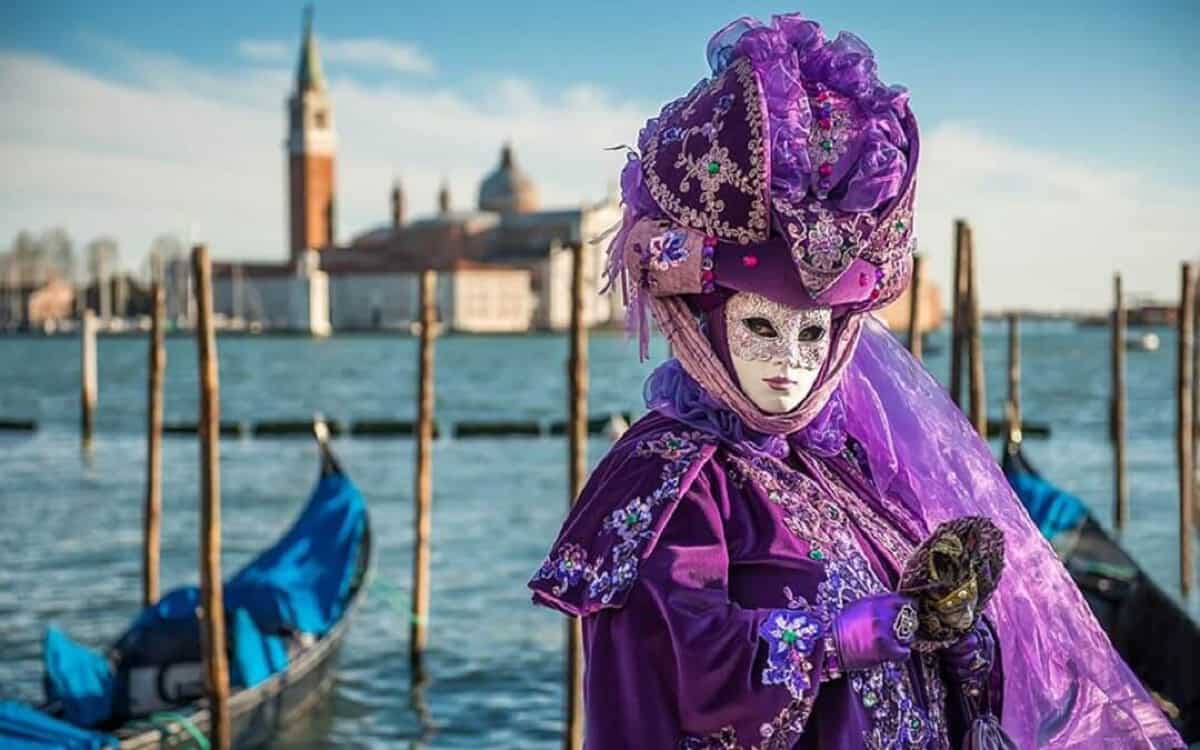
Today in Rome, you might see some costumed and masked characters around Piazza Navona and Via del Corso, but the holiday is mostly celebrated by children in school. Shrove Tuesday, or Martedì Grasso, falls on February 17 this year, so look out for Carnival festivities leading up to that date. Try popular Carnival foods like castagnole, the famous sugar-coated fried dough balls, or snack on frappe, which are crunchy strips of fried dough dusted with powdered sugar.
-
Il Carnevale dei Burattini (puppet show) | 7–15 Feb 2026
At Teatro San Carlino in Villa Borghese, this is one of the most reliable family picks: a Carnival-themed puppet show paired with a festive atmosphere designed for kids (with specific weekend showtimes and special matinées). -
Tiber Carnival (Carnevale Tiberino) | Sat 14 Feb 2026, from 10:00
A playful, sport-meets-Carnival event along the river, starting at Scalo de Pinedo (Flaminio area). Expect masks, activities on the river (including canoes and similar gear), plus a costumed walk along the banks that heads toward Castel Sant’Angelo. -
Carnevale for kids at Casina di Raffaello | Tue 17 Feb 2026, from 10:00
Casina di Raffaello (Villa Borghese) hosts a Carnival day for kids on Tuesday, February 17, 10:00 am–7:00 pm, with creative workshops and story readings to spark imagination and transform into funny animals and fantastic creatures. Price: €8 per child, per workshop. -
Carnival Skate at the Pincio (in costume) | Sun 15 Feb 2026, 14:00
The Pattinatori del Pincio invite everyone to roll in costume. Meeting point is 14:00 at Ponte del Pincio (Piazzale dei Martiri). Families usually keep to Villa Borghese paths, while more confident skaters head farther out into the city for a noisy, confetti-filled ride. -
Marconi Carnival Parade (Sfilata di Carnevale a Marconi) | Sun 15 Feb 2026, from 14:30
A classic neighbourhood parade with a very local feel: meet at 14:30 at the Parrocchia Santi Aquila e Priscilla (Via Blaserna), depart at 14:45, and follow the route through the Marconi area toward Parco Tevere Marconi, with music, masks and plenty of colour. -
La Tarantella del Carnevale | Sun 15 Feb 2026, 18:00
A big folk-energy celebration at Auditorium Parco della Musica Ennio Morricone: traditional masks, dancers and live music culminating in the main concert at 18:00 in Sala Sinopoli. Many editions also include a pre-show masked parade in the outdoor spaces. -
Carnevale A Mare | Fiumicino, Sun 8 Feb and Sun 15 Feb 2026
For an easy day trip: on 8 Feb, the programme includes a market (morning through late afternoon) and street entertainment. On 15 Feb, the big highlight is the grand parade along the waterfront area (Via Torre Clementina zone), with groups in costume and floats.
If you’re ready to have a good time, many
clubs in Rome
throw carnival parties and themed events. Don’t forget, you might need to wear a mask!The post
Carnevale Romano: The Story of Rome’s Carnival
appeared first on Romeing
.