
Monday 27 July 2026 10:07
Living like a local: a first-timer’s guide to everyday life in a Rome apartment
So you’ve booked your first trip abroad, and you’ve chosen Rome. Excellent decision. You’ve also chosen to stay in an apartment rather than a hotel, which means you’re about to have a completely different experience of the city. No buffet breakfast, no 24/7 front desk, no room service… Just you, a set of keys, and […]
#central rome #cultural differences #english-speaking doctors in rome #food shopping #forbidden in rome #garbage disposal #grocery shopping in rome #local laws #pharmacies in rome #rental apartments #roman tips #trash sorting
read the news on FromHometoRome – FHTR
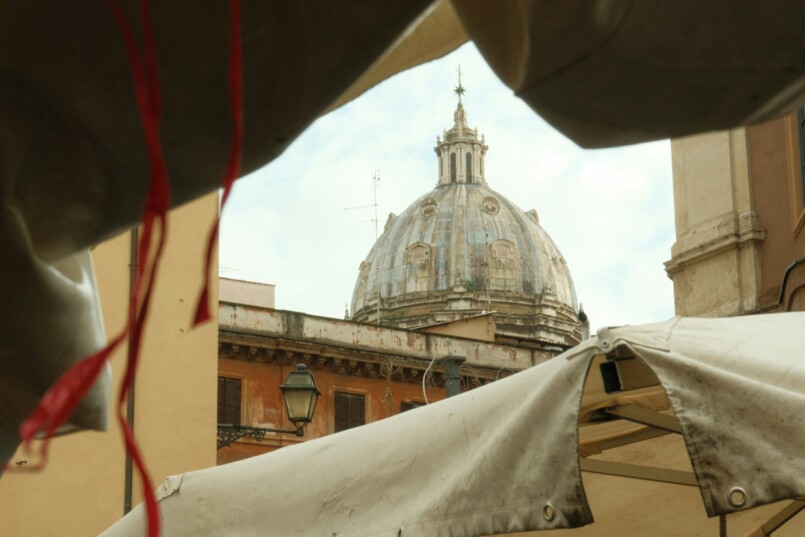
So you’ve booked your first trip abroad, and you’ve chosen Rome. Excellent decision. You’ve also chosen to stay in an apartment rather than a hotel, which means you’re about to have a completely different experience of the city. No buffet breakfast, no 24/7 front desk, no room service… Just you, a set of keys, and a city that has been doing things its own way for about 3,000 years.
This new blog post is meant for you, the first-time traveler who wants to feel at home – our company’s motto, by the way! And one that we apply in our day-to-day whenever we interact with our guests.
The first thing to understand is that an Italian apartment, especially one in a historic building, operates by its own logic. There are layers: for example, new fixtures laying side by side with, say, plumbing that has been working for literally 200 years or more. There may be shutters instead of curtains, and learning to angle them correctly against the afternoon sun is a skill worth acquiring.
None of this is a problem. It’s just different, as we explained in
this older post
, and different is why you came. Before you arrive, read any welcome guide or instructions we’ve provided, ideally more than once. If something isn’t clear, ask. We’re here to help! And if something seems broken, check the instructions before assuming it is: a surprising number of things that seem broken in Roman apartments (the washing machine? The A/C? the router?) are simply operated differently from what you’re used to.One of the great pleasures of staying in an apartment is being able to shop and eat like a resident. Rome has several supermarket chains — PAM, Carrefour, and Tigre are among the most common in the city center — and most neighborhoods have at least one within easy walking distance. Hours vary, but they all tend to be open from around 8am to 8pm. Some may be closed on Sundays, or open only in the morning that day.
For fruit, vegetables, and a genuine slice of local life, neighborhood markets are a far better option than any supermarket. Most neighborhoods have a covered or open-air market that runs on weekday mornings. They typically wind down by 1pm or 2pm, so plan accordingly. You don’t need Italian to shop there: point, hold up fingers for quantities, and smile. It works. Remember to say hello and goodbye, and by day 3 of your stay you’ll have friends for life!
There are a few quirks to grocery shopping in Rome that are worth knowing before you walk into your first supermarket — from how to handle produce to what to expect at the register.
We’ve put together a dedicated guide
that covers everything, and it’s a quick read that will save you at least one moment of mild confusion in the vegetable aisle.This is the section that no travel blog talks about, and it’s the one that will save you from accidentally offending your Roman neighbors.
Rome has a mandatory separate waste collection system called raccolta differenziata, and it applies to you too, even as a short-term visitor. Bins are divided by category: organic waste, paper, plastic and metal, glass, and general non-recyclable waste.
We’ve written a full guide to how garbage disposal works in Rome
, and we leave information on where to dispose of the trash depending on where you’re staying. If anything isn’t clear, just ask us before you need to throw anything away.Italian pharmacies, AKA farmacie (plural for farmacia) are extraordinarily useful and considerably more accessible than what first-time international travelers might be used to. Pharmacists in Italy are trained to dispense advice on minor ailments and can recommend over-the-counter treatments for things that might require a doctor’s visit elsewhere. If you have a cold, a stomach upset, a minor skin issue, or a blister the size of a small country (cobblestones can be unfriendly that way!), the pharmacy should be your first stop. Pharmacies can also sell a range of different products, from formula to shaving cream, from aftersun to shoes
Pharmacies are identified by a green cross outside, which is usually illuminated, and are found in virtually every neighborhood. When your local pharmacy is closed, it will display a list of nearby pharmacies that are currently open, including any operating overnight. You can also search for the nearest farmacia di turno, “duty pharmacy”, online by searching for “farmacia di turno” followed by the closest landmark to your position (a square, a main drag, a monument – e.g., “farmacia di turno Piazza Venezia”).
Keep this in your pocket: for genuine emergencies, the number to call is 118 for medical assistance, or 112 for general emergencies (the European equivalent of 911). If you need to go to a hospital, the emergency department is called the pronto soccorso. Remember this if you need to tell this to someone, like a taxi driver. If you need a medical professional that speaks English, look no further than
here
.Rome is one of the most visited cities in the world, and over the years it has introduced a number of rules specifically designed to protect the city and the experience of living in it. These rules are repeated ad nauseam because tourists are not always aware of until they’ve already broken them.
Eating and drinking on the steps of monuments or churches, for example, is prohibited in many areas and can result in a fine. So is sitting on the edge of certain fountains, or throwing coins into the Trevi while doing anything other than standing politely at the barrier. Swimming in any of the city’s fountains is absolutely forbidden and has been for years, despite what viral videos might suggest.
We’ve put together two posts that are worth reading before you leave for Italy: one on
cultural differences you may encounter in Rome
that will help you understand the unwritten social rules of the city, and one on five things you genuinely cannot do in Rome
— as in, they are actually illegal. Neither is meant to scare you. Rome is a welcoming, generous city. It just asks that you treat it accordingly.The guests who enjoy Rome the most are almost never the ones who pack the most into each day. They’re the ones who discover a good bakery is by day two, who learn which café makes their coffee the way they like it, who find a quiet neighborhood piazza and end up hanging out there for twenty minutes doing absolutely nothing.
An apartment gives you the infrastructure to live that way. Use it. Buy groceries, cook something simple one evening, hang your laundry on the drying rack. Let yourself be, briefly, a person who lives in Rome. It’s one of the better things to be. Trust us!
Have questions about your apartment or the neighborhood? We’re always reachable — just get in touch and we’ll help you find your feet.