
Monday 3 August 2026 22:08
From September 8 to November 15, Romaeuropa Festival returns
Starting from September 8 until November 15, the 41st edition of the Romaeuropa Festival promises to be one of the most vibrant ever.
The post
From September 8 to November 15, Romaeuropa Festival returns
appeared first on Romeing
.
#events in rome #performing arts & fashion
read the news on Romeing
The 41st edition of the Romaeuropa Festival is shaping up to be one of its richest yet: 100 shows featuring 1,000 artists from around the world, bringing REF2026 to life with a programme of music, theatre, dance, digital arts and productions for children.
Once again directed by Fabrizio Grifasi, this year’s edition offers more than two months of performances across numerous venues in the capital, an invitation to listen and to see artistic creation as something still alive and necessary.
INSPIRATION
Best Events in Rome this autumn
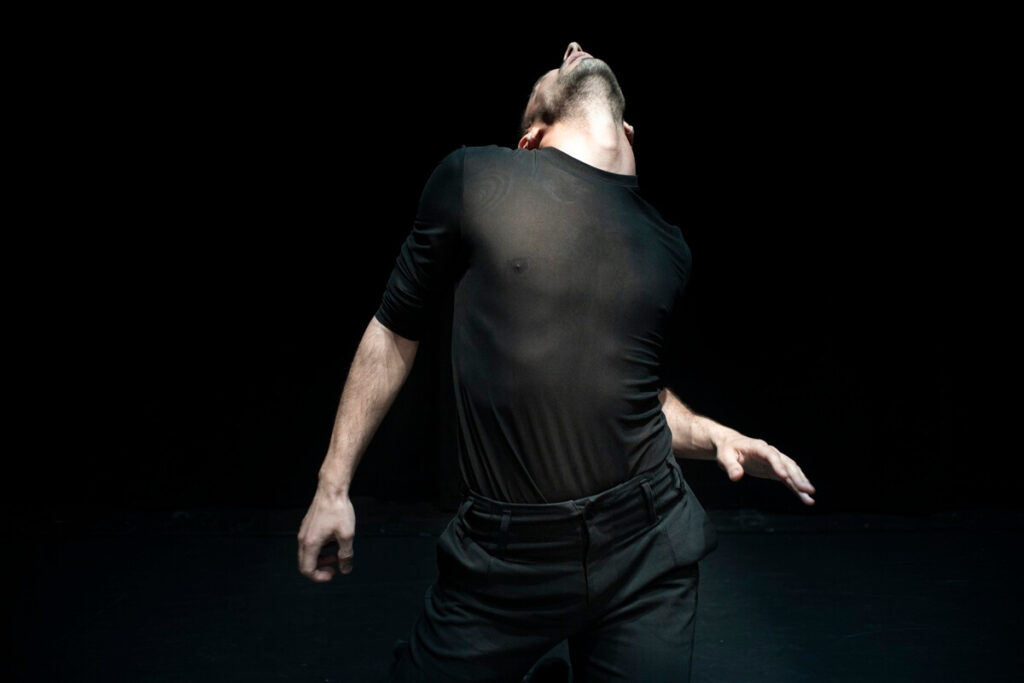
Christos Papadopoulos, Landless ©LAC Lugano Arte e Cultura – Luca Del Pia
This edition brings a wealth of major international names. Flemish choreographer Michiel Vandevelde, together with the BRYGGEN-Bruges Strings ensemble, takes to the stage at Teatro Argentina with The Four Seasons Changed, a staged concert that translates into space Max Richter’s reworking of Vivaldi’s Four Seasons. Sasha Waltz returns to dance with Bach Cello Suites Dance, set to the Cello Suites by J.S. Bach performed by cellist Anastasia Kobekina.
There’s also French choreographer Boris Charmatz, back at the Festival with Muette, an intimate and radical solo, and Britain’s Ben Duke, who reinvents Hamlet as a contemporary anti-hero in a show that weaves together dance, theatre, stand-up and irony to question the meaning of life. Franco-Algerian Nacera Belaza returns too, forming an intense duo with Valérie Dréville in a performance where gesture meets space.
At
Teatro Costanzi
, Opera Ballet Vlaanderen presents a programme of works by Jan Martens, Anne Teresa De Keersmaeker and Christos Papadopoulos, three names who have appeared at the Festival many times. Papadopoulos himself directs Greek dancer Georgios Kotsifakis in Landless, continuing his personal exploration of rhythm, repetition and the transformation of movement. Also from Greece, choreographer Katerina Andreou joins Carte Blanche, Norway’s national dance company, bringing fourteen performers together in How Romantic.Some of the dance programme is designed to reach every generation and audience: Le Pas du Monde by the remarkable Collectif XY, at Teatro Olimpico, speaks to all ages with its shifting landscapes, while Morocco’s Groupe Acrobatique de Tanger returns under the direction of Raphaëlle Boitel with a new creation in which acrobatic power meets a formal, poetic language. From South Korea, Eun-Me Ahn blends ritual, new circus, pop culture, eccentricity and colour in her Post-Orientalist Express.
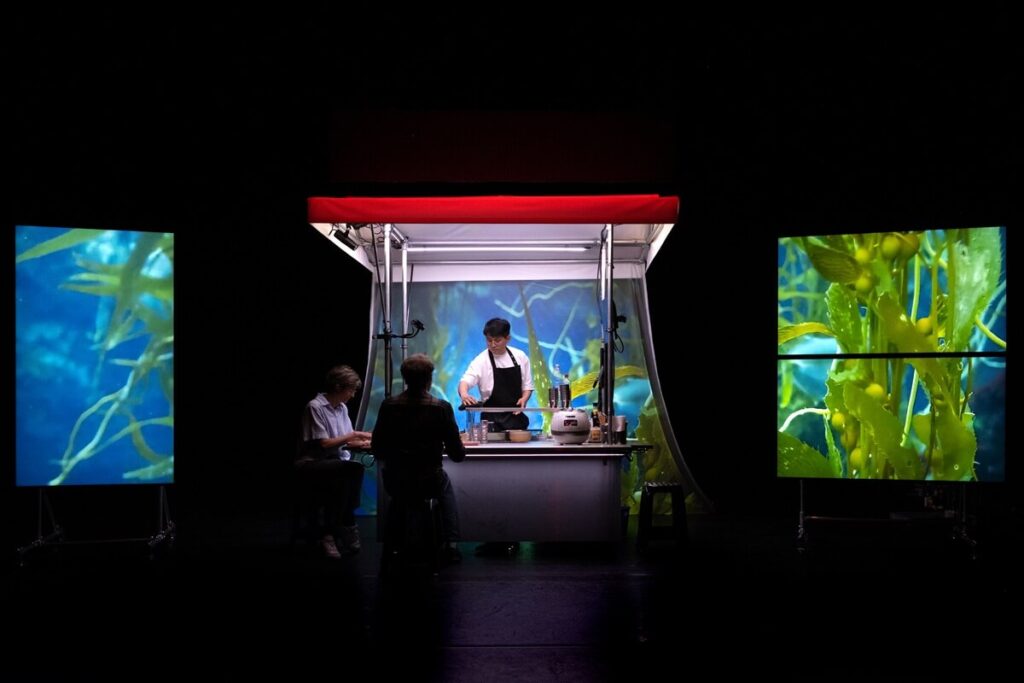
Jaha Koo, Haribo kimchi PH. bea borgers
Also from South Korea, director Jaha Koo, winner of the International Ibsen Award, presents Haribo Kimchi: a real street-food stall fills the stage, turning the making of the traditional Korean fermented cabbage into an autobiographical and symbolic gesture.
Memory takes centre stage for India’s Pankaj Tiwari and Portuguese director Tiago Rodrigues too. The first, with The Harvest of Broken Promises, tells of the transformation of Indian agriculture under the influence of global agribusiness; the second fills the stage with the memory of his father in No Yogurt for the Dead, a tribute built around the unfinished notes he left behind.
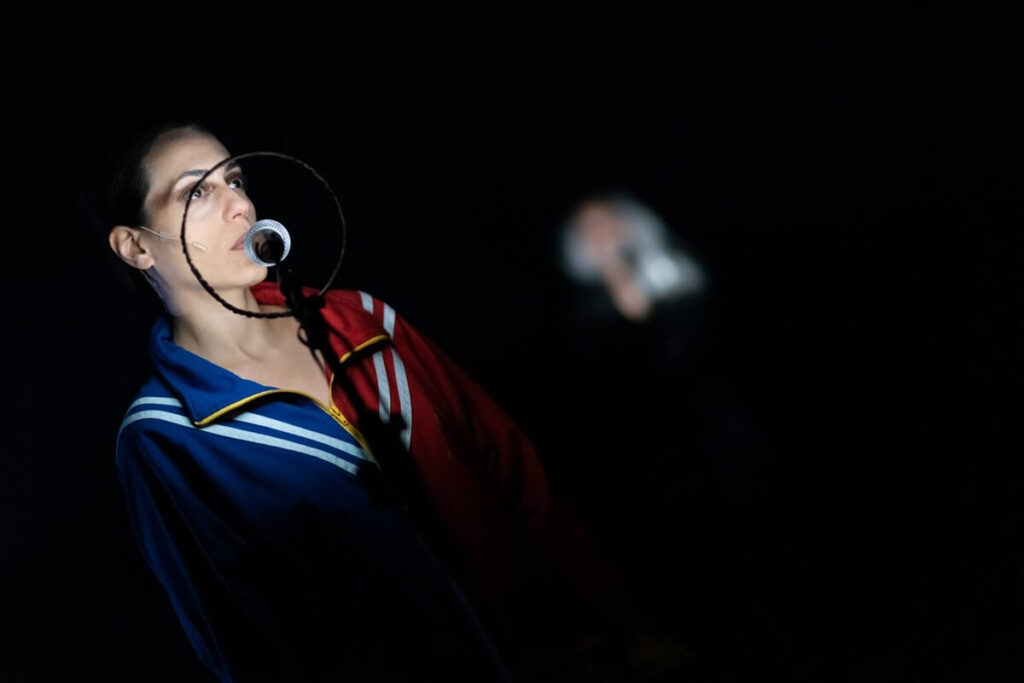
GiorginaPi, Lemnos
One of the directors who has most deeply shaped the Festival’s history returns to Romaeuropa: Romeo Castellucci, with his new creation Faust. Fatto, non detto, a radical theatrical experience that probes the figure of the artist, suspended between condemnation and redemption, reality and vision.
At Teatro Vascello, Marta Cuscunà makes her national premiere with her latest production, La Medium, the true story of Hersilie Rouy, daughter of the illusionist Charles Rouy, confined to an asylum for fourteen years, in a world that weaves together illusionism and gives voice to “invisible women”. Director Giorgina Pi reworks the figure of Philoctetes from a female perspective in Lemnos, intertwining myth and the present.
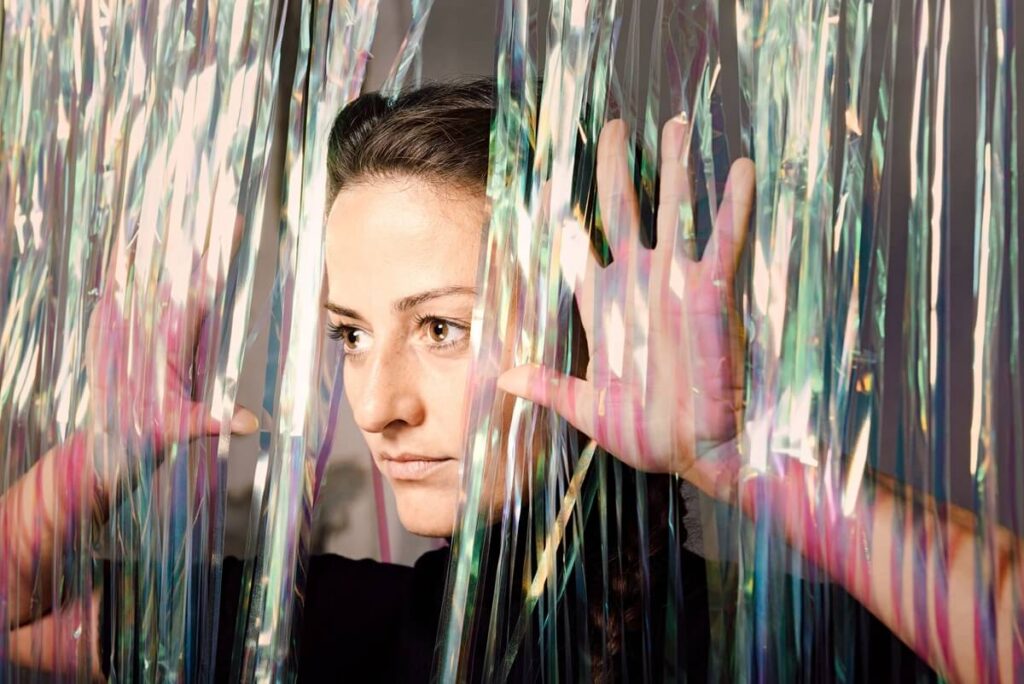
Marta Cuscunà @Alessandro Ruzzier
Also at Teatro Vascello, Pietro Giannini presents his new work STARMAN – The True Story of Leon Skum, a concrete yet visionary portrait that questions the myth of technology in the age of Elon Musk. Giacomo Bisordi, with Fabrizio Sinisi, brings the novel Il Prodigio to the stage with actors Chiara Ferrara, Gabriele Portoghese and Federica Rosellini, while Ubu Prize winner Marco D’Agostin, alongside dancer Marta Ciappina, gathers in Catalogo a moving mosaic of farewells, in which a dancer’s final performance becomes a choral score on leave-taking, shaped through the eyes of choreographers and directors such as Silvia Gribaudi, Francesca Pennini / CollettivO CineticO, Sotterraneo and Emio Greco / Pieter C. Scholten.
At the Mattatoio, the cycle HEIMAT – Homeland/Foreigner unfolds, created with the “Silvio d’Amico” National Academy of Dramatic Art: five days of performance in which Fabiana Iacozzilli, Thom Luz, Ersan Mondtag, Leonardo Lidi and Leonardo Manzan direct the same performers from the Academy’s second-level acting course, using a shared stage device to build a plural reflection on identity and belonging.
Still in Testaccio, the female body and its representation are at the heart of CAN CAN, a show born from the meeting of director Giovanni Ortoleva, winner of the National Critics’ Prize, and actress Irene Mantova. Director Piero Maccarinelli presents a reading of L’ora dei predatori by Giuliano da Empoli with Elisabetta Pozzi and Tullio Solenghi, followed by a talk on the book’s themes.
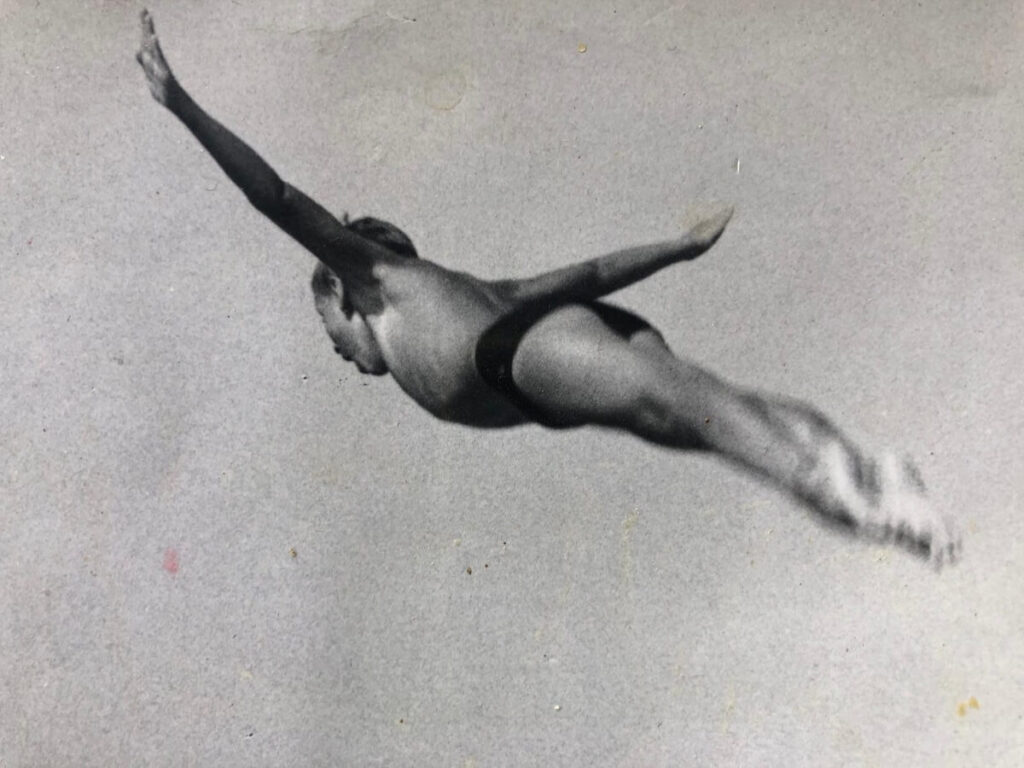
Vinicio Capossela, Renato tuffo
Music has a major place in the Festival’s programme, moving between experimentation, pop and contemporary composition: Osmium, the project born from the meeting of cellist Hildur Guðnadóttir and James Ginzburg; a concert by Kangding Ray, presenting his new AV live show Superfluid; and the award-winning percussion ensemble Third Coast Percussion in dialogue with composer, performer and electronic musician Jlin.
For the first time at the Festival, Vinicio Capossela appears too, presenting with Pierpaolo Capovilla And Death Shall Have No Dominion, a ballad opera loosely drawn from the life of Renato Striglia and the work of Dylan Thomas.
There are several tributes marking the anniversaries of the great 20th-century masters: for Steve Reich’s ninetieth birthday, a homage from Blow Up Percussion with performances of works such as Pendulum Music, Drumming and Come Out; while for the centenary of Hans Werner Henze’s birth, Romaeuropa presents Voices, in partnership with the Accademia Nazionale di Santa Cecilia, a powerful civic and poetic work entrusted to the New European Ensemble conducted by Carlo Boccadoro.
In the Sala Santa Cecilia of the Auditorium, pianists Maki Namekawa and Thomas Enhco go head to head interpreting one of the most celebrated piano works of the 20th century, Keith Jarrett’s The Köln Concert, while The Avex Ensemble performs a special film-concert dedicated to the iconic Blade Runner soundtrack by Vangelis.
The REF Kids & Family section offers three weekends of free shows and activities in music, theatre and new circus, curated by Stefania Lo Giudice. The spaces of La Pelanda are transformed into an area for children and families, with a programme of performances and a playground of games and hands-on activities.
Highlights range from Flanders’ ZONZO, bringing jazz to the youngest audiences, to a focus on the Catalan scene with the magic show Maginarium by Pau Segalés and Copiar by Animal Religion, which invites children from the audience on stage. From the Netherlands, de Dansers offer a joyful journey through the body with A Small Anatomy, while Japan’s Kenji Shinohe brings manga culture to a teenage audience with Action Briquette Z – Manga, Beat & Dance.
Closing
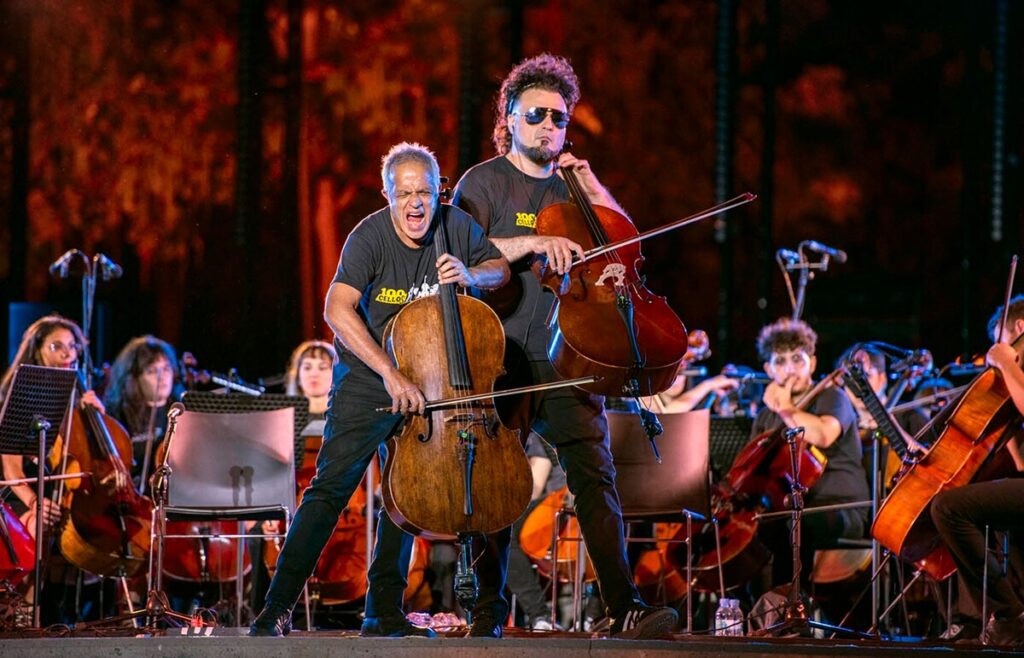
100Cellos, Enrico Melozzi
The grand finale on 15 November promises to be a true musical marathon, a great collective ritual of listening in which musicians take over the main hall of the Auditorium Parco della Musica in a closing event that moves across repertoires, audiences and moods. Twelve hours of concerts, with an afternoon that anticipates the celebrations for Philip Glass’s ninetieth birthday (January 2027) through a complete performance of the Études by Vanessa Wagner and of Águas da Amazônia by Third Coast Percussion, with the start and end of the day in the Sala Santa Cecilia devoted entirely to Enrico Melozzi’s Classical Rave Party.
The morning is dedicated to 100 Cellos with Giovanni Sollima; the evening to the Orchestra Notturna Clandestina, with special guests including Alessandro Baricco, Gloria Campaner, Elsa Lila, Anastasio and Fasma, breaking down the boundaries between academia and real life, between concert and celebration.
Venues and Tickets
The Romaeuropa Festival 2026 takes place across various spaces in the city, from historic theatres to museums and cultural institutions. The 2026 venues are:
- American Academy in Rome, Via Angelo Masina 5
- Auditorium Conciliazione, Via della Conciliazione 4
- Auditorium Parco della Musica, Via Pietro de Coubertin 30
- Mattatoio, Piazza Orazio Giustiniani 4
-
MAXXI, Via Guido Reni 4a
- Teatro Argentina, Largo di Torre Argentina 52
- Teatro Brancaccio, Via Merulana 244
- Teatro dell’Opera di Roma (Costanzi), Piazza Beniamino Gigli
- Teatro India, Lungotevere Vittorio Gassman 1
- Teatro Olimpico, Piazza Gentile da Fabriano 17
- Teatro Valle, Via del Teatro Valle 21
- Teatro Vascello, Via Giacinto Carini 78
-
Villa Medici, Viale della Trinità dei Monti 1
Tickets can be purchased online at romaeuropa.net through
Vivaticket
. For information and assistance, the box office is available on +39 06 4555 3050, also on WhatsApp, Monday to Friday (10am-1pm / 2pm-6pm).Download the full program
The post
From September 8 to November 15, Romaeuropa Festival returns
appeared first on Romeing
.