
Monday 19 October 2026 19:10
A Guide to Rome’s Trionfale District
People often ask me which neighborhood in Rome I love most. They usually expect the answer to be Testaccio or Trastevere, places whose identities are already firmly established in the collective imagination. Instead, I always answer Trionfale. The reaction is almost always the same. Trionfale? Exactly. If your understanding of Rome begins and ends with […]
The post
A Guide to Rome’s Trionfale District
appeared first on Katie Parla
.
#food & wine #markets #rome & lazio #rome on a budget
read the news on Katie Parla

People often ask me which neighborhood in Rome I love most. They usually expect the answer to be Testaccio or Trastevere, places whose identities are already firmly established in the collective imagination. Instead, I always answer Trionfale.
The reaction is almost always the same. Trionfale?
Exactly.
If your understanding of Rome begins and ends with antiquity, the Renaissance, and the Baroque, Trionfale can seem unremarkable. Just beyond the Vatican Museums, the neighborhood goes about its business with little indication that one of the world’s busiest tourist destinations is only a few blocks away. Only occasional views of St. Peter’s dome rising above the apartment buildings betray its location. There are no monumental ruins around every corner, no cinematic piazzas crowded with tourists, no succession of famous churches that appear in every guidebook. What it does offer is something I value much more: a remarkably complete picture of how Rome feeds itself.
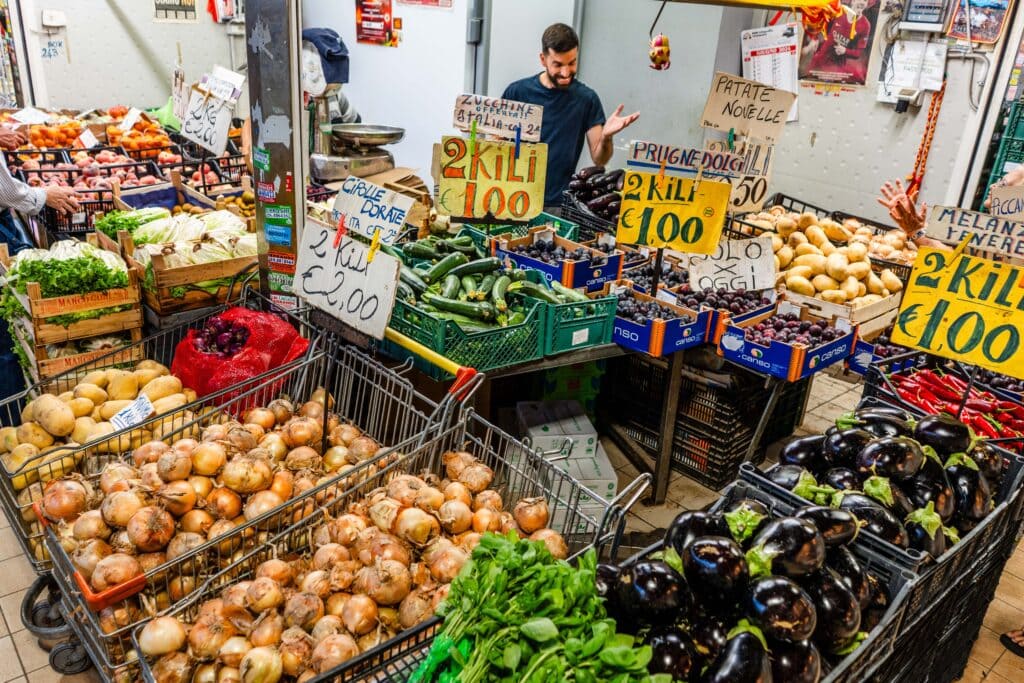
Every
tour I lead through the Trionfale
begins at the Mercato Trionfale, not because it is convenient but because it is impossible to understand Roman cooking without first understanding the systems that sustain it. Before anyone tastes a supplì or a slice of pizza, we spend time talking about agriculture, seasonality, distribution, and the relationship between the countryside and the capital. Roman cuisine is often presented as though it emerged fully formed inside trattorias. The reality is that it begins with farmers, shepherds, fishermen, wholesalers, and market vendors.There are more than two hundred stalls inside the market, making it one of the largest covered food markets in Europe, but its size is only part of what makes it exceptional. Unlike many central Roman markets that have gradually surrendered space to stalls selling David boxers (would Michelangelo have approved?), fake truffle oil, and limoncello shot glasses, Trionfale still functions primarily as a place where Romans buy ingredients. Farmers sell vegetables they harvested themselves, while fishmongers maintain displays that rival those of the city’s finest restaurants. Roman butchers work alongside Filipino butchers whose clientele reflects decades of immigration that have quietly reshaped and enriched the neighborhood. At Beppe e i Suoi Formaggi, one of Italy’s most thoughtful cheese specialists, conversations about raw milk inevitably become musings about biodiversity, pasture management, and the economics of small-scale dairying. At Partager, Alessandra Spedicato brings together ingredients from small producers and flavors from across the Mediterranean. Her thoughtful cooking and selection of Italian and French wines invite you to linger over lunch amid the bustle of the market. Within a single building, it becomes possible to explain nearly every force that shapes central Italian cooking.
That’s the real reason I return to Trionfale again and again. It offers a view of Roman food culture that extends far beyond the plate.
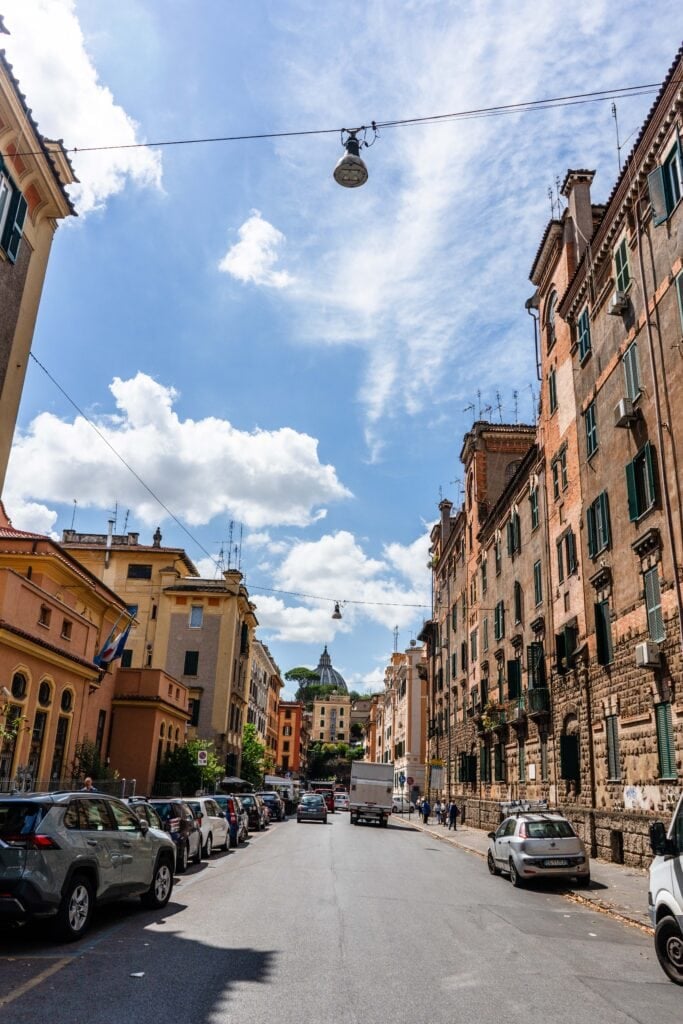
Although Trionfale became one of Rome’s official quartieri in the early twentieth century, much of the district assumed its present form during the decades in which Rome was transforming from the relatively modest capital of a newly unified nation into the administrative center of an expanding state. Population growth accelerated dramatically as migrants from rural Lazio, Abruzzo, Umbria, Le Marche, and southern Italy arrived in search of work. They built roads, staffed ministries, worked on construction sites, and supplied the labor necessary to sustain an increasingly modern capital. Housing them became one of the central urban questions facing Rome.
The Fascist government inherited that challenge and pursued it through an enormous building program that permanently altered the city’s geography. While thousands of poorer Romans were displaced to distant borgate on the urban fringe, neighborhoods such as Trionfale developed through extensive public housing projects built by the Istituto Case Popolari. The rational street grid, generous courtyards, apartment blocks, schools, and commercial spaces that still define the neighborhood were intended to create a functioning urban district for working families rather than an extension of the historic center. Like so much of twentieth-century Rome, Trionfale emerged from policies that cannot be separated from the violence and contradictions of the regime that produced them. Yet the neighborhood that exists today belongs not to Fascism but to the generations of Romans who made ordinary lives there after the dictatorship collapsed.
That history helps explain why Trionfale feels different from neighborhoods whose identities are more tightly bound to tourism. Its streets remain residential, its shops primarily serve local customers, and retired residents linger on benches and at cafés. Daily life, rather than spectacle, determines the neighborhood’s rhythm.
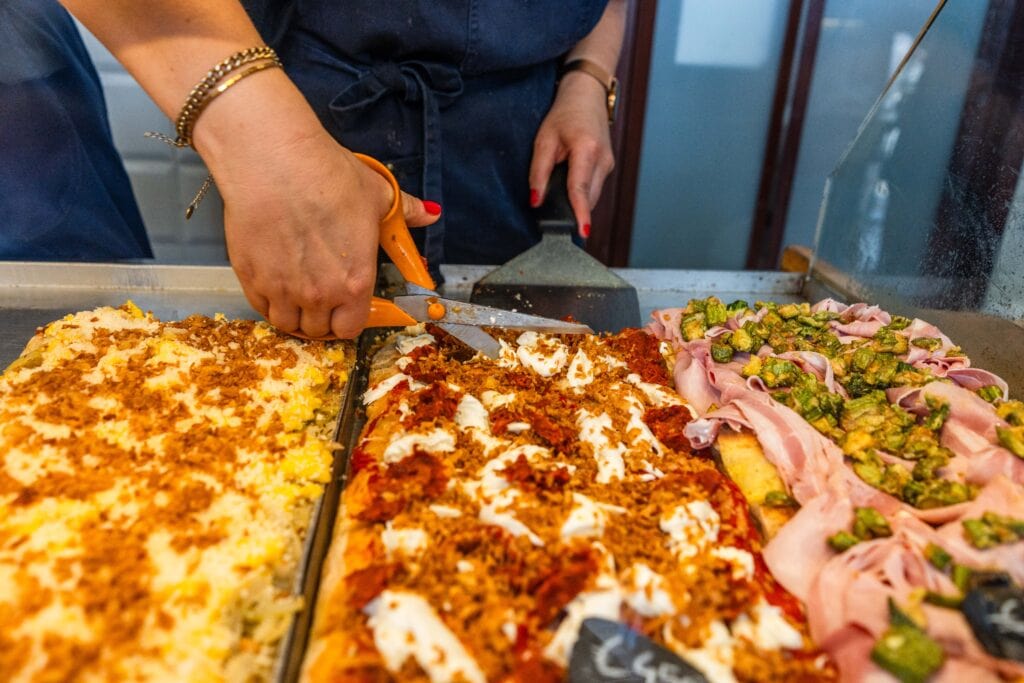
Trionfale also happens to be one of the finest places in Rome to eat.
I have long believed that the neighborhood is the city’s unofficial capital of pizza.
Eroi della Pizza
produces what I consider the finest supplì in Rome, while Pizzarium
does superlative fritti, though new management threatens to throw 20 years of accolades it has received for pizza in teglia in doubt. Nearby, Gabriele Bonci had launched the next chapter of his career as Panificio Bonci is now vegan (including cashew cheese). Just a short walk away, La Tradizione
, founded more than forty years ago, remains one of the city’s indispensable food shops, a place where extraordinary ingredients are presented with equal measures of scholarship and generosity.The neighborhood has quietly become one of Rome’s strongest destinations for wine as well.
Fischio
and Solovino
maintain lists that many restaurants would envy, demonstrating that serious wine culture flourishes just as comfortably in residential neighborhoods as it does in the city center.I suspect my affection for Trionfale ultimately comes from the fact that it refuses easy narratives. It is simultaneously a product of twentieth-century urban planning, internal migration, public housing policy, immigration, and agricultural exchange. Its food reflects all of those histories.
When people ask me why I continue bringing visitors to Trionfale after all these years, my answer has very little to do with individual venues or shops, excellent though they are. I bring them because the neighborhood explains Rome better than almost anywhere else. Once you understand Trionfale, the rest of the city comes into focus.
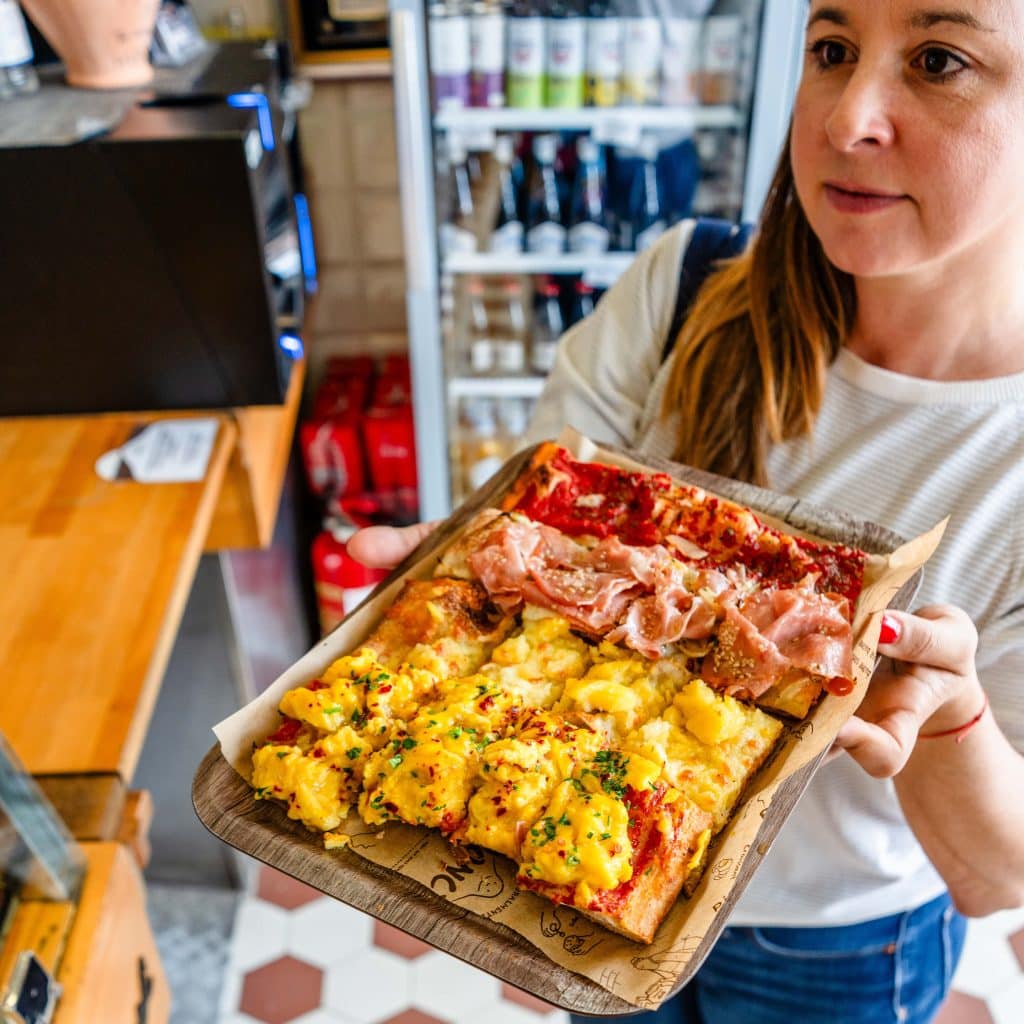
The neighborhood just north of the Vatican is largely tourist-free and residential, making for a truly local experience as residents shop for their groceries. Pizza joints, food shops, and the Mercato Trionfale, a modern construction that is one of the largest covered markets in Rome, are sensational, and the area is also home to the world’s best pizza by the slice. This three-hour walking tour will explore the overlooked streets of this residential district and focus on its delis, bakeries, market, cafes, and gelato shops. Visitors who have already explored the historic center or are looking for a profoundly Roman culinary experience will come away with an understanding of how locals eat and shop in their own neighborhoods. Time permitting, the tour also pops into adjacent Prati for a fascinating contrast in Roman quotidian life.
Get in touch
to tour with us!The post
A Guide to Rome’s Trionfale District
appeared first on Katie Parla
.