
Tuesday 27 October 2026 14:10
Richard Avedon at Palazzo Esposizioni Roma: Faces of the American West
From October 9 to January 31 Palazzo Esposizioni in Rome presents an exhibition dedicated to the American photographer Richard Avedon.
The post
Richard Avedon at Palazzo Esposizioni Roma: Faces of the American West
appeared first on Romeing
.
#events in rome #rome exhibitions
read the news on Romeing
From October 9, 2026 to January 31, 2027, Palazzo Esposizioni Roma presents Richard Avedon. In the American West, 1979–1984, an exhibition dedicated to one of the American photographer’s most ambitious projects. Curated by Clément Chéroux, director of the Fondation Henri Cartier-Bresson, it brings together all 110 portraits from Avedon’s 1985 book In the American West for the first time in Italy, alongside archived materials that reveal how the series came together.
As you enter the galleries, the first thing that stands out is how little surrounds the people in the photographs. There are no sweeping desert landscapes or picturesque Western towns. Instead, visitors come face-to-face with the people who lived and worked there.
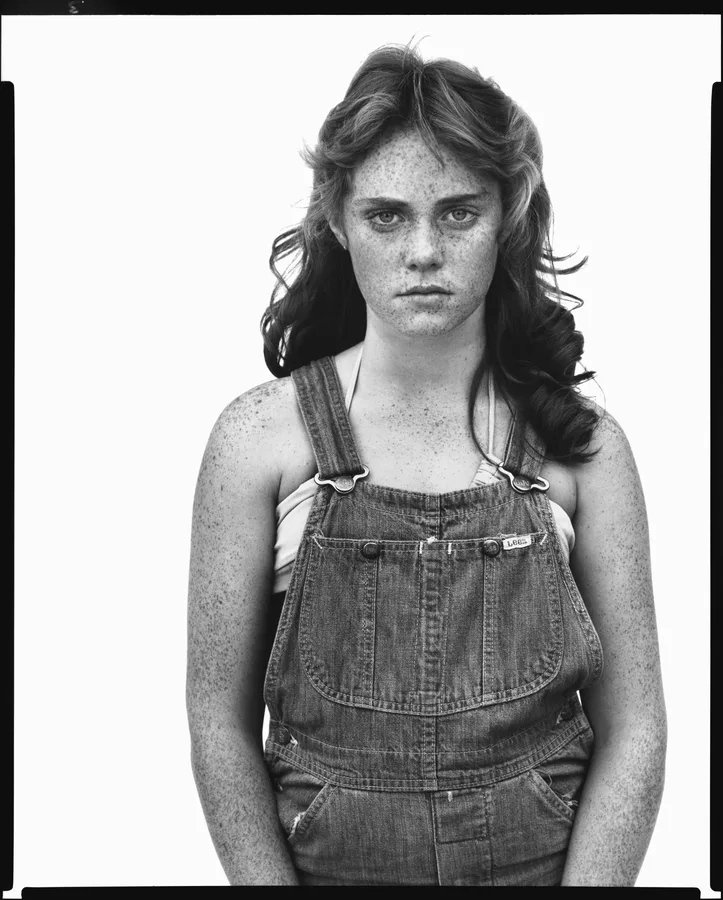
Sandra Bennett, twelve year old, Rocky Ford, Colorado, August 23, 1980. Photograph by Richard Avedon © The Richard Avedon Foundation
By the late 1970s, Avedon had already established himself as one of America’s most celebrated photographers. Known for his fashion photography for Harper’s Bazaar and Vogue, he had spent much of his career photographing models, celebrities and public figures. But for this project, he turned his attention to people who rarely appeared in front of a professional camera.
The idea began in 1978, after a photograph Avedon took of a Montana ranch foreman caught the attention of the Amon Carter Museum in Fort Worth, Texas. Beginning in 1979, he spent five years travelling through 21 states, stopping at truck stops, livestock markets, slaughterhouses, mining camps and oil fields. He photographed more than a thousand people, eventually selecting the portraits that would appear in his book.
The timing was significant. While popular television shows portrayed an image of American wealth and success, recession and deindustrialization were affecting working communities across the country. Avedon’s subjects offered a very different view of the West.
Moving along the gallery walls, you begin to notice the same approach in every photograph. Each person stands against a plain white backdrop, photographed from the front in natural light. Without a workplace or surrounding landscape to distract you, the smallest details become impossible to ignore: a stained shirt, a tired expression, a particular way of holding the hands.
The people in the photos are identified by their names, occupations, and the places and dates they were photographed. Among them are coal miners, farmworkers, truck drivers and young children. Some look directly at the camera with confidence while others seem uncomfortable or guarded. Together, their portraits go against the familiar image of the American West as a place defined by cowboys and open landscapes.
Although the images may seem random, Avedon carefully arranged each sitting. Working outdoors with a large-format camera, he watched how his subjects moved and reacted, sometimes directing their poses. The result sits somewhere between a documentary record and a portrait deliberately constructed by the photographer.
The photographs are displayed in the same sequence as the original book, with blank spaces on the walls representing its empty pages. This unusual arrangement gives visitors a chance to pause between faces rather than rush from one portrait to the next.
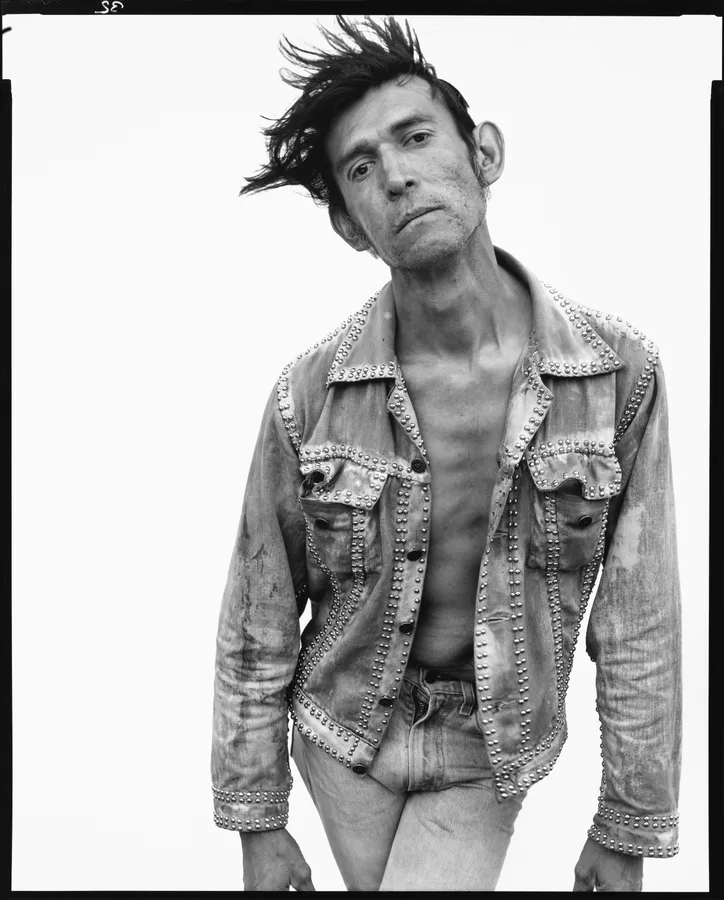
David Beason, shipping clerk, Denver, Colorado, July 25, 1981. Photograph by Richard Avedon © The Richard Avedon Foundation
One of the most memorable portraits is that of Ronald Fischer, a beekeeper photographed in Davis, California, in 1981. Standing shirtless before Avedon’s camera, Fischer is covered in bees, with insects clustered across his body. It is an image that is difficult to pass without stopping.
A nearby explanation reveals just how carefully the photograph was planned. Fischer’s body was coated in queen bee pheromone to attract the swarm, and Avedon made 121 exposures over two days. He ultimately chose the image in which Fischer appears almost meditative despite the insects surrounding him. The portrait makes clear that Avedon was not simply recording what happened to be in front of him; he was also creating the conditions for an extraordinary image.
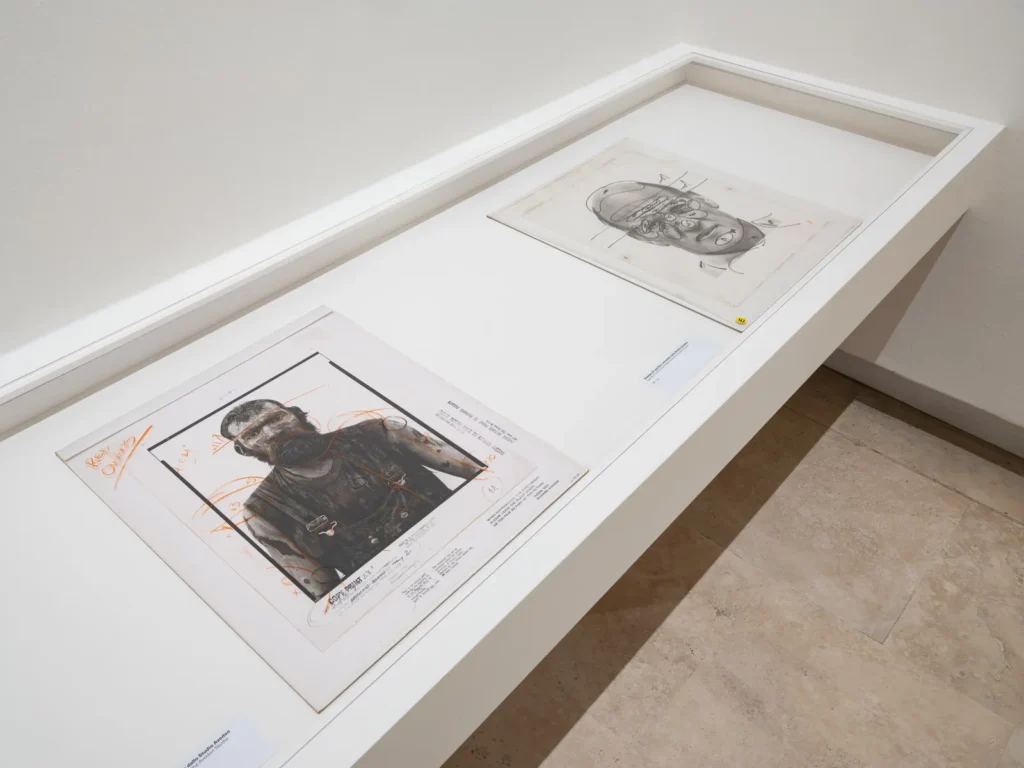
Photo Daniele Molajoli © Azienda Speciale Palaexpo
Elsewhere, the exhibition opens up the process behind the portraits through archival material from the Richard Avedon Foundation. Visitors can see Polaroids taken before sittings, handwritten notes and correspondence with the people photographed. The Polaroids were not just tests: their numbers connected each person to a file containing their name, permission to publish and contact details, allowing the studio to later send them a print, a book and an exhibition invitation.
Some of the silver gelatin prints still carry Avedon’s handwritten instructions to his printers, indicating which areas should be enhanced or softened. These small traces show the work that went into photographs whose simplicity can otherwise seem effortless.
Particularly revealing is a letter from Cheryl Harrison to Avedon, written after the original exhibition opened in 1985. She describes how much the experience meant to her family and suggests that anyone who looked beyond the photography would see the people themselves. Her words give the sitters a voice in a series that initially sparked debate over how the American West had been portrayed.
First shown at the Amon Carter Museum in 1985, In the American West has since become a landmark of twentieth-century portrait photography. At Palazzo Esposizioni Roma, the impact lies not only in the images themselves but in the time you spend looking at each person. Running until January 31, 2027, the exhibition invites visitors to see an America often overlooked, one face at a time.
DISCOVER THE BEST CURRENT EXHIBITIONS IN ROME
The post
Richard Avedon at Palazzo Esposizioni Roma: Faces of the American West
appeared first on Romeing
.