
Tuesday 10 November 2026 14:11
Trajan’s Baths: Visiting the Painted City and the Great Mosaic Beneath the Oppian Hill
The Painted City and the Great Mosaic at Trajan's Baths on the Oppian Hill: what you see, how the trial opening works and how to book a visit.
The post
Trajan’s Baths: Visiting the Painted City and the Great Mosaic Beneath the Oppian Hill
appeared first on Romeing
.
#historic sites/buildings #senza categoria #things to see and do in rome
read the news on Romeing
On the Oppian Hill, a short walk from the
Colosseum
, the underground gallery and the great exedra of Trajan’s Baths can be visited again. The restoration was completed in September 2026, and since then the site has been open to the public on a trial basis, with guided tours for small groups only. We went down beneath the park to see two works that until recently were accessible almost exclusively to scholars: the Painted City and the Great Mosaic.
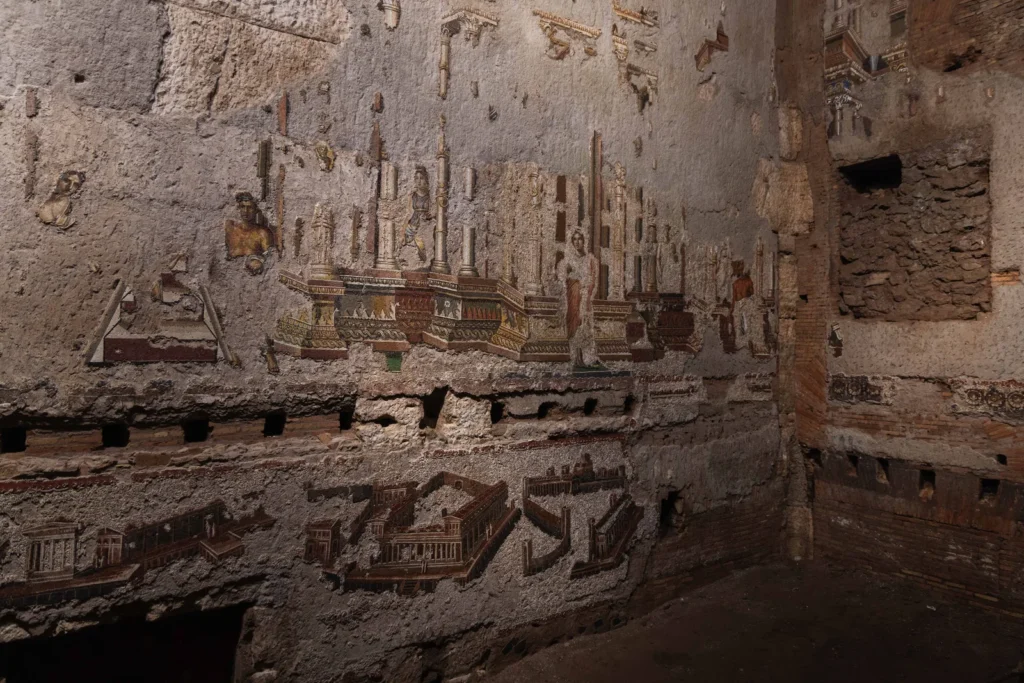
Trajan’s Baths were designed by Apollodorus of Damascus, the emperor’s leading architect, and inaugurated on June 22, 109 AD. They covered about 60,000 square meters on a large terrace of the Oppian Hill and incorporated older structures, including rooms of
Nero’s Domus Aurea
. They were more than public baths: around the bathing complex stretched a large green area lined with porticoes, used for sports, leisure and culture.The southwestern exedra, a semicircular structure about 30 meters across, shows this clearly. According to the most widely accepted theory, it housed a large public library on two levels. The niches along the wall, still clearly visible, would have held the books, while the stepped seating was used by people attending readings and public gatherings. Standing there, it’s easy to picture it full of people.
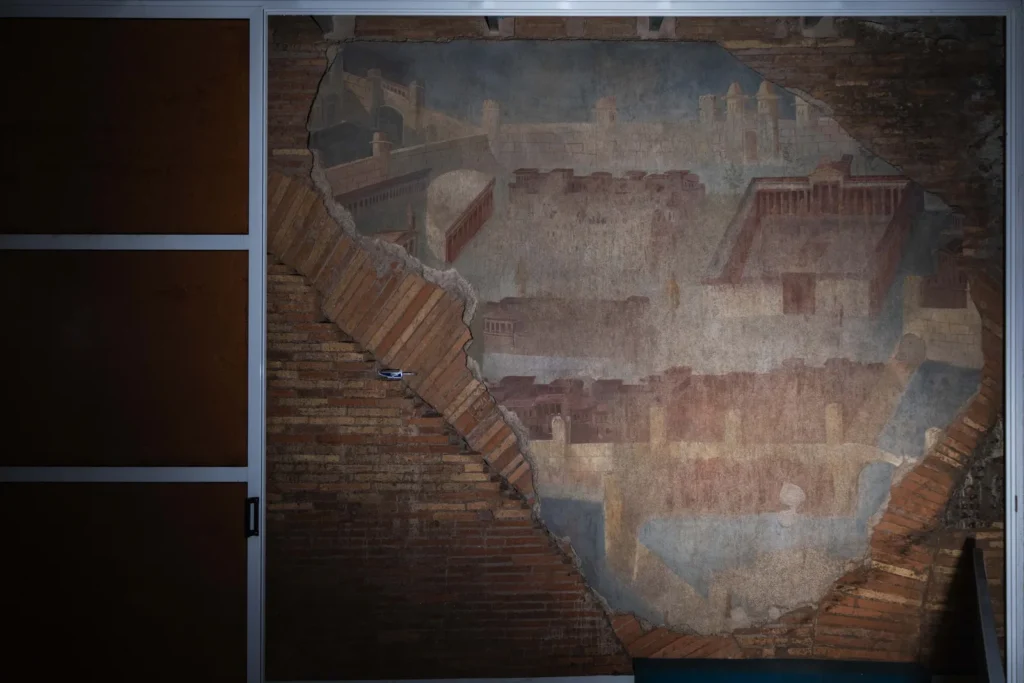
Below the exedra runs the gallery that once supported the portico. This is where you find the Painted City, a fresco of about 10 square meters showing a city from above, enclosed by walls and towers, with buildings drawn in perspective. It is older than the baths: it belonged to an earlier building and dates to the 1st century AD, in the Neronian or Flavian period. When Trajan built his complex, that wall ended up buried in the foundations, which is why it survived.
For years scholars tried to identify the city it depicts, without reaching a definite answer. The most likely theory today is that it is an ideal city rather than a real place. That makes it even more intriguing: more than a view, it shows how a Roman painter imagined the perfect city. Most Roman frescoes we know depict myths, gardens or painted architecture, while an urban scene like this one is extremely rare.
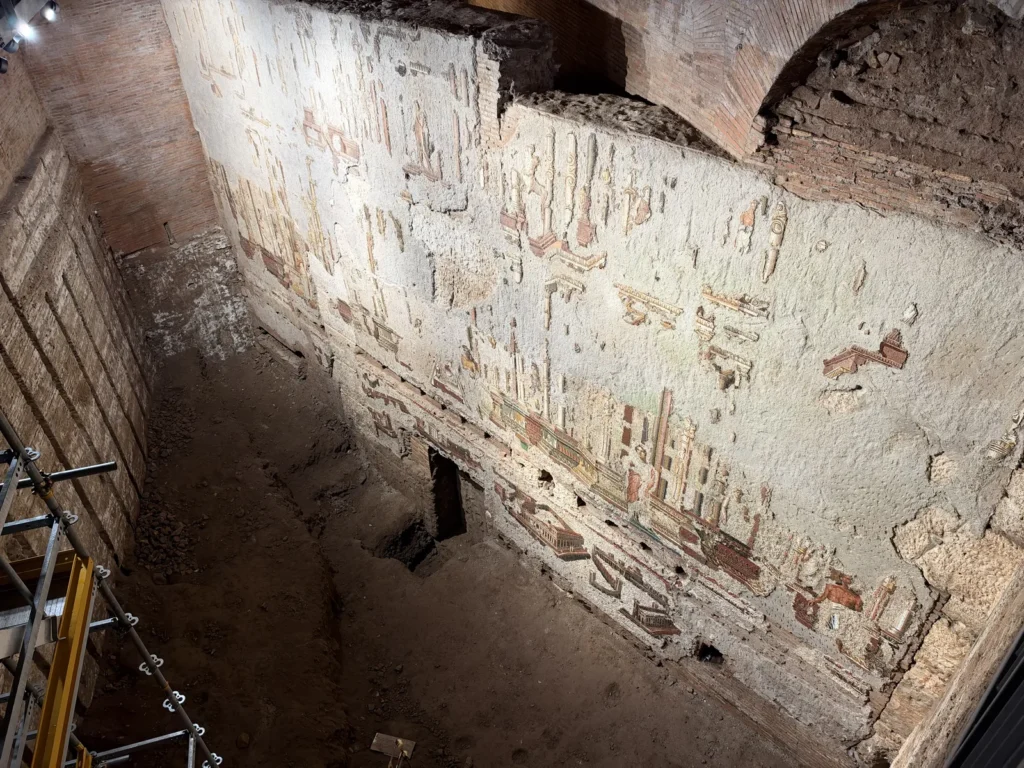
A little further on is the Great Mosaic, which Rome’s mayor Roberto Gualtieri described at the inauguration as the largest wall mosaic from ancient Rome ever discovered. You only grasp its size in person: the decorated wall is about 16 meters wide. The mosaic adorned a large hall facing a nymphaeum and depicts a scaenae frons, the monumental facade of a theater stage, divided into two tiers with statues and figures. Among them is the scene that gives the mosaic its popular name, the Muse and the Philosopher.
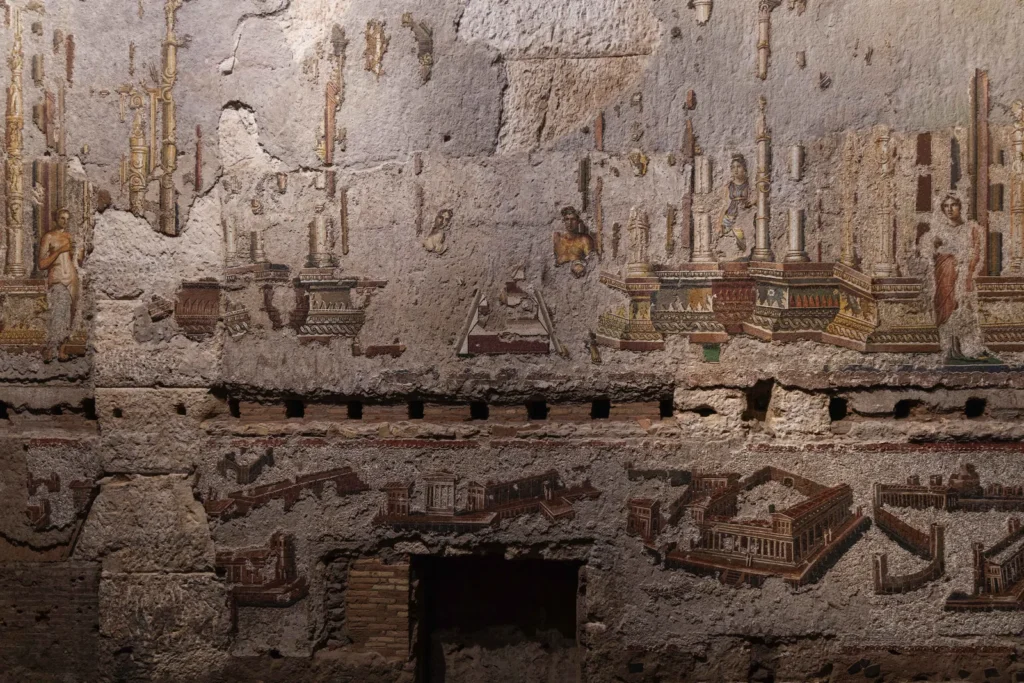
The mosaic is viewed from a walkway built during the works, which crosses the hall from above and connects the two parts of the gallery. What stands out, beyond the scale, is the quality of the workmanship: even from there you can make out the shading of the faces, the folds of the clothing and the architectural details, all made with tiny tesserae. It’s the kind of precision you would expect from a luxury floor, not from a wall several meters high.
Excavations carried out during the project brought new findings to light. Below the Great Mosaic, another decorated band emerged, showing a harbor town with buildings that probably faced the sea, in the style of the so-called maritime villas. Even lower down, archaeologists found the remains of a facing made of large marble slabs and, in the center of the wall, a marble-clad niche about 2.2 meters high. These finds show that the walls of the hall must have reached about 12 meters in height.
The route also includes a triangular room displaying the fistulae, the lead pipes that once carried water to the baths.
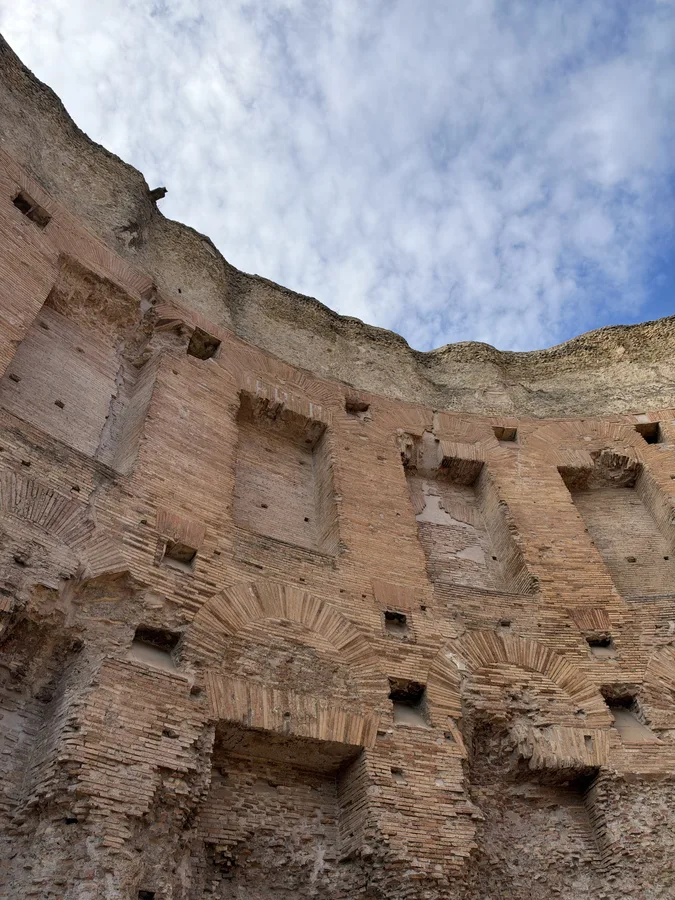
After the underground section, you head back outside and move on to the exedra. The garden has been redesigned with new paths, a new lawn, viewpoints and lighting designed to highlight the archaeological remains as well. At the foot of the exedra, a new cavea with tiered seating has been built. In the future, this space will be able to host concerts, readings and talks, becoming once again a place where people gather, just as it was almost 2,000 years ago.
The site is open to the public on a trial basis, only on certain days, so that the Capitoline Superintendence can monitor how the presence of visitors affects the conservation of such delicate works. Visits began on Saturday, September 12, 2026, and take place Friday through Sunday. The schedule may change during the trial phase, so check the available dates when you book.
- Where: Via del Monte Oppio, at the corner of Via delle Terme di Tito
- When: Friday through Sunday, six tours a day at 10 am, 11 am, 12 pm, 1 pm, 2 pm and 3 pm
- Group size: up to 15 people per tour
- Tours: guided, free of charge, in Italian only
-
Booking: recommended, onlineor through the 060608 call center
The post
Trajan’s Baths: Visiting the Painted City and the Great Mosaic Beneath the Oppian Hill
appeared first on Romeing
.